OreGairu, a realistic depiction of human relationships – Wataru Watari

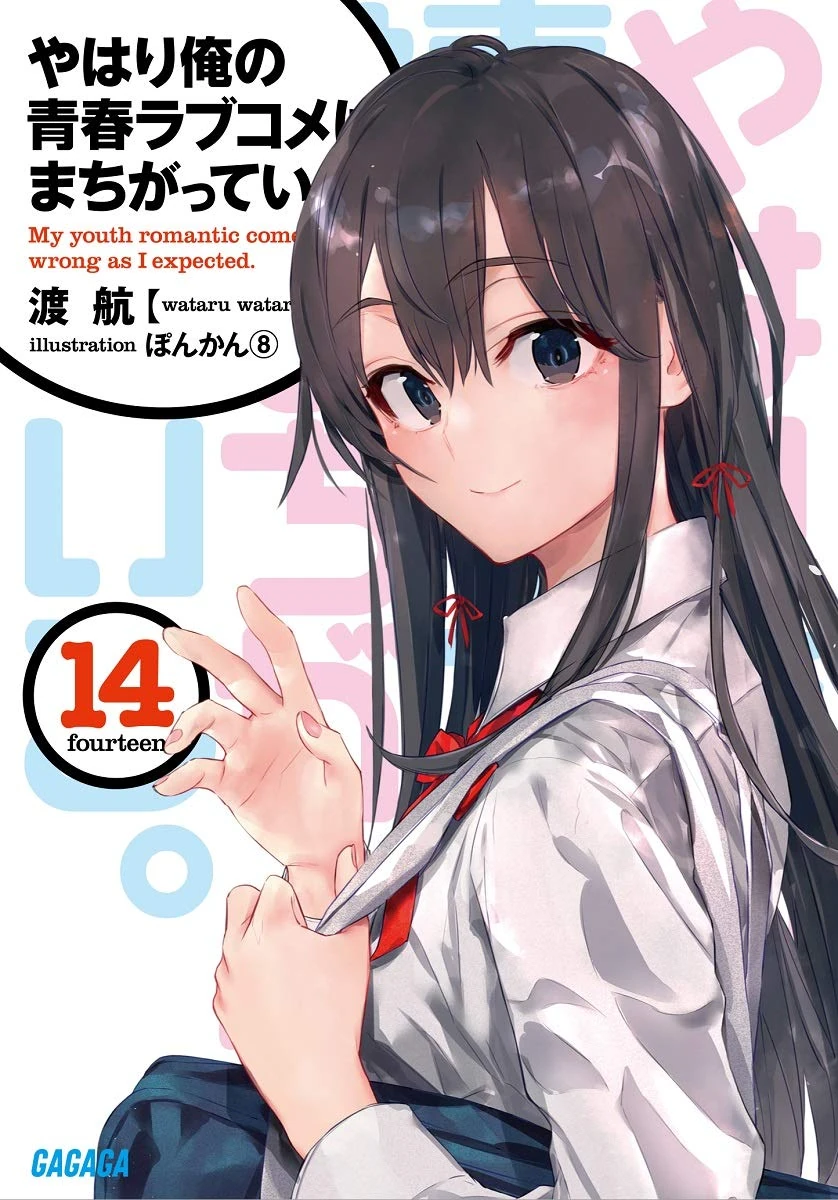
Volume 14 cover

Yahari Ore no Seishun Rabukome wa Machigatteiru, My Youth Romantic Comedy Is Wrong, As I Expected in English, also known as My Teen Romantic Comedy SNAFU (SNAFU stands for Situation Normal: All Fucked Up) is a Japanese light novel series written by Wataru Watari and illustrated by Ponkan8. This name is too bloody long so I’m just going to use the common abbreviation of OreGairu instead. It is one of my all-time favourite media ever since I first read it around 2012-2013, it is also one of the rare things I give 10 out of 10 for rather than the usual “it’s alright”.

This is more of an analysis than a review and there might be a few spoilers, I will try to keep them to a minimum, but you have been warned.

The series follows a high school loner called Hachiman Hikigaya, who is forced by his teacher to join the school’s service club, working with two pretty girls who have their problems to offer help and advice to others while dealing with their inner conflicts. You might think isn’t this a typical anime story where beautiful girls randomly fall for the protagonist and they live happily in a harem together, but it couldn’t be further from the truth. Despite the title, there is little to no romance in OreGairu, even though it’s a dude with two hot girls in a room most of the time, there is no romantic spark or vibe between any of them. Initially, the girls and Hachiman don’t even like each other that much. In volume 1 to 5 of the series, the story progresses by having the group to solve problems for side characters case by a case like a mission. This helps world-building and introduce these characters into the plot. But from volume 6 to the end, the emotions and struggle turned up the heat immensely, which leads to major character development, Hachiman’s famous heartfelt confession of wanting something genuine and relationship issues between the club members surfaces and they must resolve between them at the end.

What makes OreGairu attractive to me isn’t just because of emotional dramas and roller coaster, it is the unique blend of characters, their day to day interactions, and the storytelling through the perspective of these individuals. There are 3 protagonists in the series, one of them is the aforementioned Hachiman Hikigaya, others are the two girls Yukino Yukinoshita and Yui Yuigahama. But in this writing, I want to focus on Hachiman Hikigaya as he has changed the most and his feeling are the most important since he is the viewpoint character.

From left to right: Iroha Isshiki, Hachiman Hikigaya, Yukino Yukinoshita, and Yui Yuigahama.

Yui Yugahama is Hachiman’s classmate. She was always known as the outgoing, nice, pretty girl that everyone can get along with. But she is quite selfish and manipulative (but in a nice way!). Yui always tries to please others to blend in and she is very good at sensing changes within a social group. She admires Hachiman and Yukino’s refusal to accept and adjust to the social setting, and the fact that they can always express their true feelings. She is the only character within the group that is not fussed on looking for something genuine but thinks it’s ok to be superficial if she can the keep the things and people, in a way she wanted.

Yukino Yukinoshita is the club leader and is described to be the most confident, know it all in her group, she is smart, beautiful, and has an icy demeanour. Due to her talent and beauty, she is envied by most girls and is disgusted by their attitude to undermine her instead of improving themselves, thus she has few friends but like Hachiman, she is always true to her feelings. She has a twisted sense of noblesse oblige and believes it is the duty of the exceptional to help the “lost lambs” of the world. Her personality often leads her to be disgusted at the naiveté of others. But she is the most insecure and afraid person of the group due to the immense pressure from her family.

I portrait a lot of myself in Hachiman and agree with a lot of his views on personal connections and interactions, I would go as far as to say some parts of my life mirrored his. He had a rough time in his previous school where he was discriminated to the point that he becomes isolated before the series. Hachiman developed a twisted view on life and society due to this experience, also due to his pragmatic and logical nature, most people perceive him to be a rude and disgusting guy. He has strong social perception skills that figure out the true nature of people and their relations immediately. He is the only character that I know from any media that can come out with gold like “Effort will never betray you, though it may betray your dreams”. But deep down he is a kind, compassionate, self-sacrificial nice guy, Hachiman believes that he is an unimportant existence and uses his low social status to find solutions by taking the blame to keep everyone else happy.

Despite these years of social isolation and hurt, Hachiman still has hope and crave for the interactions, he wants a genuine connection with someone, even though he tells himself he doesn’t. I can relate a lot to this, although I’m not a loner like Hachiman, I too consider most relationships in the world to be shallow and dishonest. I’m not saying everyone is an asshole, some of it can be kind intentions but generally, people behave in a particular way to fit into a certain group or put up a distinct face to secure their status quo within a said group, some people just do it unaware to continue in their relationship, even if it might not be what they truly desire. Just like Hachiman, I absolutely despise these “fake” relationships and detest those who tried form one with me, although our motives are slightly different, we both willing to sacrifice our feelings and well-being to help someone as far as we can to the bitter end believing that there might be something genuine at the very end and we both know this is just wishful thinking.

This kind of characters is like an egg, hard to crack, but once you get through, it’s all soft and easily damaged. This type of personality has a defence mechanism for self-protection, for him, it is his distrust of people and cold demeanour to avoid building bond with anyone, and for me, it is my notorious lack of compassion and empathy. This avoidant lets them evade instituting unnecessary devotion and reduces the likelihood of getting hurt because once they are committed to helping, they’ll be extremely emotionally invested and affected by it. Well, in my case instead of feeling hurt, I just get very irritated and bothersome by something irrelevant that I should’ve never get affected by.

Initially, the bond of the club member shares plays a stark contrast to Hayato Hayama’s clique and later the student council. Hayato Hayama is a perfect foil to Hachiman, he is a typical good looking, charismatic central figure of the class, an alpha male character. Hayama is kind to everyone and he wants to maintain his social gathering even if its superficial to keep everyone happy. He is willing to bend his will to act and perform as what everyone is expected to him. However, he is poor at handling complicated social matters and occasionally he appears to be indecisive when he must deal with these circumstances within his clique, rather than showing his true colours, he will step away from these issues. His characteristics and methods contrast that of Hachiman. The relationships in his clique are also very different from the service club, Yumiko who likes Hayama but couldn’t confess to him, Ebina hides her true feeling of not wanting to be a relationship, so she doesn’t upset the dynamic of the group. Tobe, Yamato, and Ōoka are only in this clique because they are a friend of Hayama but not with each other. Yui is in the clique too and she likewise never reveal her real sentiment towards them. Hachiman concludes that the bond the clique possesses is feeble and artificial opposed to that of the service club which is much more sincere.

Unfortunately for Hachiman, later in the series his group also turn superficial, because the club is precious to him, instead of rejecting it, he has become a hypocrite and accepted changes and pretend nothing ever happened. At some point in our lives, I am sure that everyone has accepted a superficial relationship. I am a stone-hearted individual and even for someone like me, has handled certain relationship perplexities without being the real me, like Hachiman, I altered my behaviour and diminish my value as a person. I didn’t notice what I’ve done at the time but soon realised it after a cooling down period and as a person who prides myself on honesty and integrity, I didn’t enjoy those actions, nor do I ever wanted to do it. But this is what sometimes real life does to you, just like me Hachiman must learn and grow from those experience to continue his quest to find a genuine relationship. OreGairu does an excellent job of fitting in these real-life scenarios into the plot to develop the characters.

OreGairu makes incredible use of subtext within the dialogue to enhance the atmosphere of each scene and make the characters stand out. Hachiman is a character that is brilliant at reading between the lines and able to turn other’s intentions and interpret them as a negative narrative or to point out the superficial behaviours or contradictions. Since he is not in any social circle it makes his opinions appear impartial and justified, the reader is experiencing this though him and feel the same way. This becomes more and more apparent as the story progresses and getting more personal and emotional and Hachiman starts to oppose and lie to himself. It makes it easy to get emotional with him not just because he is a relatable character but also that we already have an attachment to his sorrows and witnessed his inner conflict and know what he sincerely desires.

The fact that OreGairu is unusual in this genre and its characters are unique while being very likeable and relatable places it firmly ahead of anything I’ve ever seen. It bravely has a self-deprecating main character and highlights faults in our sociality structure, and how frail human relationships are. But it often points them out in a timely and friendly manner, like the teacher giving a bit of wisdom and life advice to Hachiman when he is stuck and not sure what he should do, the reader can resonate this with their own experience and grow with the cast.

I love all the characters in OreGairu also its unique plot and storytelling! Teacher Hiratsuka’s advice to Hachiman especially stand out to me, such as “human connection will easily fade away naturally if someone doesn’t choose to maintain it”, and then tell him that if he wants to keep something he has to make an effort otherwise people just tend to walk their separate ways, these are some words of gold and there are many more that I like. Although this turned into massive writing about Hachiman, he is such a compelling character that I couldn’t help myself to do so. Honesty I can’t praise this series enough, every aspect of it is made to a high standard from the ground up, the settings, characters, writing, all the way to the little details are fantastic. I highly recommend it to anyone, even if they are not into Japanese culture and story, romcom, or a slice of life genre!

PS. season 3 of the anime is coming out soon, which I’m very excited for. The anime pays great attention to detail to the original work, the voice actor’s performance is also incredible, the production team brought life to the series in ridiculous detail down to its very last cells and bone! The atmosphere, the music, and the visuals are just marvellous. I would recommend it as much as I do with the novel!

Pokemon Sword and Shield, is it really good or a disappointment?

Pokemon is one of the most successful franchises in gaming history. Pokemon Sword and Shield is the 8th instalment of the main games and the first one for home consoles, well, a semi-home console in the case of the Nintendo Switch.

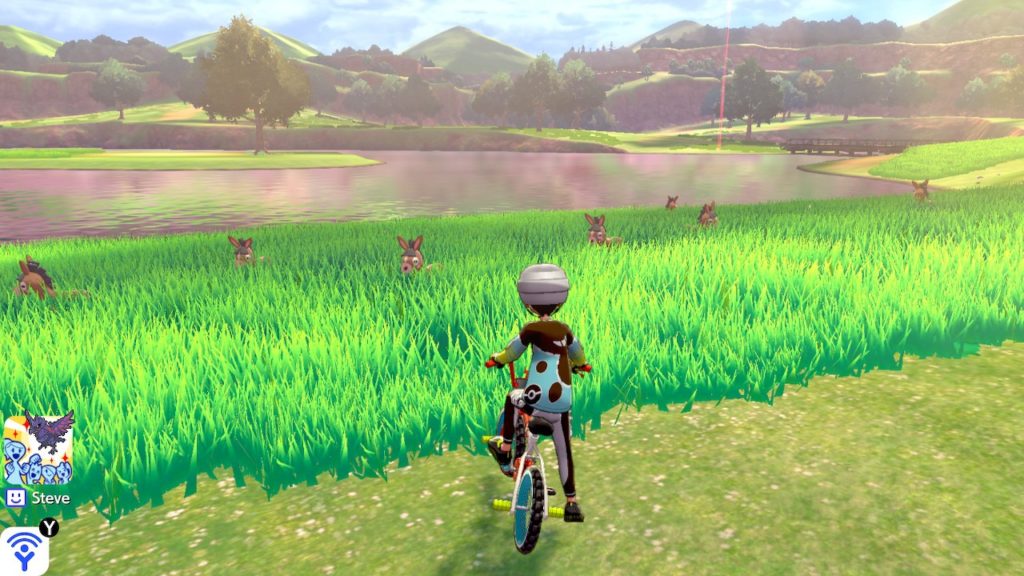
Sword and Shield bring the player to the new Galar region which is created based on the UK. Graphically this is the most beautiful game in the series ever, which is expected since it is on the most powerful console the main Pokemon game has ever been on. In terms of the visual design, it is also the best I have ever seen in a Pokemon game. The British theme is represented very well, from the red brick buildings to the fields, even the inside of apartments and hotels, layouts of towns and cities, this is also reflected in the design of the new Pokemons (There is even an English teapot Pokemon!). Almost every room has an iron cast hot-water baseboard radiator which is a standard in the UK residences. The camera angles are spot on too, for example in Wyndon, a city in the game clearly inspired by London. It has a river, Ferris wheel, big stadium, monorail and a station looks like Euston, it has executed admirably to shows off these landmarks to give that London vibe. Competing in a stadium is a neat touch too, it gives the main event atmosphere to the important fights and British people love a big sporting event. This adds more significant to the gym battles.

Wyndon lake

One criticism I have for the graphics is that a lot of rooms look copy and pasted because the game doesn’t have enough variant of interior assets and there is a dearth of variety of arrangements. Also, while there are a lot of houses, there are not enough explorable ones in comparison, so some areas feel restricted even though the actual size is bigger than any previous Pokemon game.

However, Sword and Shield is not an optimised game on the Nintendo Switch. It runs at 1980×1080 dynamic resolution in docked mode, in more complex areas it will lower the resolution. In portable mode, the game runs at a dynamic 1280×720 resolution and can go as low as 1024×576. The framerate for most parts is locked at 30fps, but it can drop down to 20fps during more intensive moments on-screen. There is little to no dip in framerate during 2v2s and raid battles, but there are a serious amount of characters popping in on big cities and the wild area.

When connected to the internet, the performance in the wild area is very poor. On top of the characters and wild Pokemon pop-in regularly, there are big slowdowns in this area too. This doesn’t affect the overall experience of the game enormously, but it is still disappointing since older titles on the Switch such as Xenoblade Chronicles 2 and Zelda: Breath of the Wild have achieved loading a large map with many objects on-screen without a big drop in framerate. I believe the performance is not as good as the previous Let’s go games, but it’s understandable because this is a much more intricate game.

Wild area with lots of Pokemon spawn

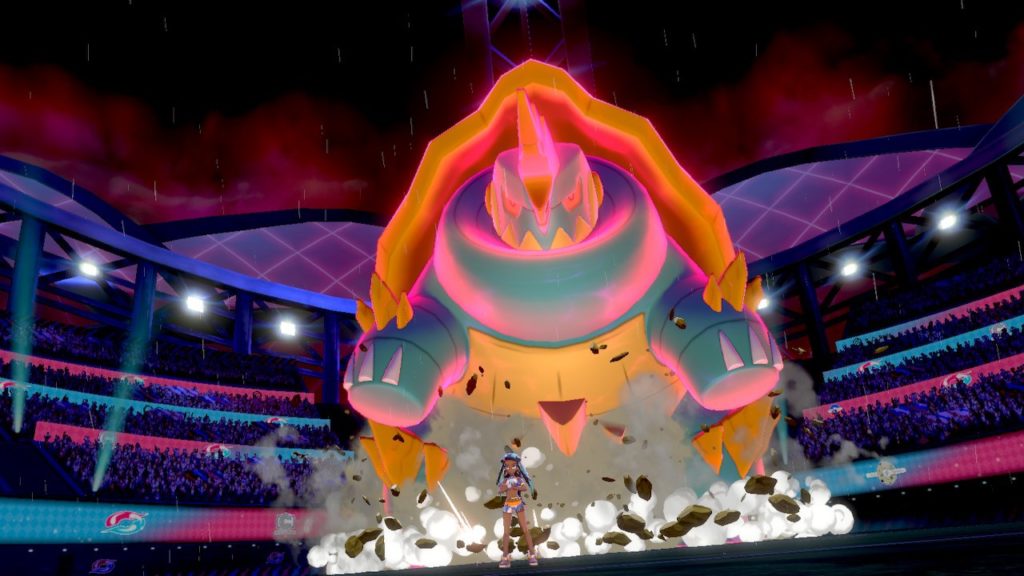
While the main gameplay has not changed since the first game, a new mechanics called Dynamax is introduced to spice up the series. Dynamax can only be used once in a battle, it increases the max HP of a Pokemon and power-up all its moves for 3 turns. This is a combination of two mechanics in the last series, Mega Evolution and Z-move, both of which have been removed probably for balancing issues. Unlike Mega Evolution and Z-move, every Pokemon can Dynamax without needing to hold a special item or being a certain species, this creates more freedom in competitive team building while maintaining the strategic depth. Another thing to note is that the player can only Dynamax in selected battle during the game, so they can’t just overwhelm ordinary trainers and strong wild Pokemon with this ability.

Dynamax raid battle (from Eurogamer)

Speaking of which, the main story of this game is quite short. It is shorter than X & Y, possible one of the shortest of the series, but there is still quite a bit of stuff to do in the postgame. There are no dungeons like the Rock Tunnel in Sword and Shield, the map design is very linear like Final Fantasy XIII. While some people prefer to just progress without the pain of going through a maze or grind through a part of the game, I miss the 90s style big RPG dungeon because it feels very rewarding when you clear it, especially when the rival ambush you at the exit without letting your Pokemon heal. However, I love the mini-game twist in gym battle, the dramatic cut scenes, the Pokemon league storyline instead of fighting the elite four, and I also liked that legendary Pokemons are given a power boost to make it feel like a real boss battle. A big change that is also welcomed since Sun and Moon is the removal of HMs. Now the player can travel all around the Galar region without needing a Pokemon (sometimes more than one!) tied down to only having weak HM moves.

TMs have also been reworked. While TMs can still be used infinite time, Sword and Shield have added TRs which generally contains stronger moves than TMs but only able to be used once. TRs can only be earned via collecting energy in the wild area or raids. Power moves such as Earthquake, Stone Edge, Fire Blast, etc use to be a TM so the player can teach them to all their Pokemon, but now they are mostly TRs, the new Pokemon’s natural move pool is not strong either so getting a team of Pokemon with a strong move set can be challenging. On the bright side, there are more stalwart moves in TRs than there used to be on TMs, so the player can collect them once they have gathered enough points. Another good bonus to the game is the Pokemon move reminder, this gives the player more freedom to personalise the Pokemon without having to grind an item all the time.

Because it is more laborious to have a lot of strong moves on the Pokemon, some parts of the game can be considerably challenging. I’ve played through most of the game without grind for extra level and with a not very balanced average team. The gym leaders are always a comparable level to me, and they can be tough without a type advantage, sometimes even with type advantage, their Pokemon might have a counter move for that type. There is one point of the game during my playthrough, the gym leader’s last Pokemon is faster and practically capable of one-hitting my entire team, furthermore, my team lack the firepower to cope because of the absents of efficacious attacks. In terms of Pokemon, there is an extensive reduction in the number of capturable Pokemon. Almost half of the overall Pokedex is absent in this game.

Gym battles

I must give the localisation team massive credit because the dialogues are superb. The use of customary English or British styled slang gives the game extra character. I love the naming of each town and cities. The music is brilliant too, it fits into what they were trying to accomplish. But it really misses voice acting. There are a lot of cut scenes with the characters’ mouth moving and un-skippable dialogue with no voices which feel awkward and ruins the pace of the game.

Overall, I feel that Sword and Shield is a fantastic extension to the series, I had a blast playing it. Is it perfect? No, the graphics performance could be better, have more animations and include voice acting. While this has not reached the heights of Gold/Silver/Crystal or Black/White in terms of gameplay, it is still a solid addition with a strong visual concept and an intriguing set of new Pokemon to obtain. Who knows, maybe a “Super” Sword and Shield is in the works for the future with the fix to all the aforementioned issues.

A Note On Otaku

The word “otaku” is used to describe a person who is over obsessive or specialized in a subject or theme in a particular area, therefore I don’t believe I am such a person yet, since I do have a wide range of interest of subjects-although I do like to specialize in japanese anime and football.

I prefer to refer to myself as an emotional robot.

Here is a wiki article if anyone wants to read up,

http://en.wikipedia.org/wiki/Otaku

Vian_siu’s Ultimate guide to Super Street Fighter 4 Chun Li

A brief guide to Super Street Fighter 4

Vian_siu’s Ultimate guide to Super Street Fighter 4 Chun Li
Chapter 1: About myself and introduction to guide

I first started playing fighting games in general around 1998ish when I stumbled upon my cousin’s SEGA Megadrive (aka, SEGA Genesis) version of Street Fighter 2 Championship Edition or Hyper Fighting (on a 3 button pad!). I have been addicted to fighting games ever since.


Since then I have moved on to Street Fighter Alpha 2, Virtua Fighter 2 on the SEGA Saturn, Tekken 3, Marvel vs Capcom, Street Fighter Alpha 3, Street Fighter EX on Playstation and Dreamcast, Capcom vs SNK on Dreamcast, Capcom vs SNK 2 on Gamecube, Virtua Fighter 4 on Playstation 2.


I started playing Zangief on Street Fighter 4 because I noticed his health, easy Spinning Pile drivers, and underrated mobility. As my skills increased I changed to E. Honda. Although I still played like Zangief, I found it a lot easier to deal damage. Then came the day I struggled to beat good opponents relatively often (Sagat) with them, I started to look for a balanced character with an easy way to land ultra combos and all round tools thats not Ryu, so I have more comeback factor and also adapt my tactics more often. My execution skill (ability to perform special moves and combos) wasn’t that great back then so my options were quite limited.


I ended up choosing Chun Li because it is easy to combo into her ultra, and her style of play doesn’t require many combos and is very versatile and fast. I had some difficulties at the start, as she is very different from how I like to play. Because I played a lot different characters with a variety of styles and strategies, I consider myself a technical player, who relies on execution skills and understanding of the game to win. In terms of skill level, I feel I am a decent casual player with proficient technical knowledge and I have spent hours trying to learn new things about the game, because I like spending some time exploring the more technical things rather than relying on a few cheap moves or online tactics. Plus it is more fun to be able to play more characters and different styles.


While I have moved on to Makoto, for the reason that she is closer to my style of play, therefore my Chun Li has retired and I decided to write this guide to pass on my knowledge to beginners or mid-level players who are trying to learn Chun Li and SSF4 properly.


Chapter 2: Character Overview and basic strategy
Chun-Li is a well rounded character, who has the fastest overall ground speed in the game. She also has one of the best, if not the best pokes( in the words of the pros, an attack that, due to its speed, range, or priority, is safe to use for pressuring or zoning your opponent) in the game and a set of normal attacks (non special moves) that most characters can only be envious of. Her special moves includes a decent fireball, a fast overhead attack (an attack that has to block high), a multiple hitting lightning legs attack that can easily combo into ultra.
These tools make her one of the best zoning (controlling your opponent’s space) characters in SSF4, who is very good at whiff punishing. Her walk speed causes her fireball game to be pretty potent and her easy combo to ultra gives her strong comeback potential.
Her mix-ups (in the words of the pros, it is a situation where your opponent has to guess between on coming treats. A good mix-up, would leave you with multiple options that leads to similar damage and your opponent into a disadvantage position regardless which option he/she is hit by unless he/she guesses right and escape the situation) are good, a lot of her options are safe. Other advantages include top-tier throwing ability, a dominating aerial game, a great Focus Attack. She also has powerful juggle options which opens up some big damage portals.
All these strengths also come with great disadvantages. She lacks strong and consistent anti-air options. Although she has many anti-air normal attacks, but all of them are situational and trades with jump-ins often, which doesn’t help because she also has below-average stamina, decreasing the room for mistakes. Despite her high priority jump attacks, her jump speed leaves something to be desired. Her jump has a high ark, and it is slow and doesn’t go very far and the wall jump is next to useless.
Her wake-up game is also questionable, with only one true invincible reversal attack (EX Spinning Bird Kick) that is an EX move (requires a EX meter to use) and extreme risk to take, worst of all, some attacks actually beat or trades with this move. Also, many of her best moves are EX move, making her meter management extremely tight and overall damage output is very low in comparison to the rest of the cast.
All that being said, her pros out weights her cons, hence she is one of the top tier characters. With all the strength and weakness in mind, her general strategy revolves heavily around staying mid range and playing the footsie (in the words of the pros, a positional game that usually takes place at the edge of each character’s range, in which players try to poke, counter poke, and score knockdowns) game and zoning, to minimize risk and grind opponents down slowly, due to her low health and low damage output. But she is not very effective from full screen due to the limited range of her fireball.
USA SSF4 champion Justin Wong once said, a good Chun Li player have usually mastered the spacing and fundamentals of the game, as she has tools to deal with almost every situations. This is exactly what is required to play her at a decent level.
• Strengths •
+ Fast walk speed.
+ Has exceptional pokes and is great at whiff punishing.
+ Tick throw game is unmatched.
+ An amazing backdash with incredible speed and range.
+ Super has 1-frame startup.
+ Two very useful Ultras, depending on the match up.
+ Great juggling ability and strong combos.


• Weaknesses •
– Low stamina (900).
– Anti air options are poor, in most situations.
– Ultras do weak damage or require specific spacing.
– Fireball has limited range.
– Many of her best tools are EX moves.
– Very risky reversal options.- Awful jump that should never be used

Chapter 3: Character’s Moves set
This section is about the breakdown of all of Chun Li’s actions, their properties, situation they are used for.
In any fighting game, character’s move is dictated by two things: hit box and frame data. The hit box determines how far the move will hit and where it is vulnerable. The frame data determines how fast the move is and how easy it is to punish it. There is hidden factor that also affect the moves is priority, basically when two moves’ hit box collide, this decides which move wins. However this can only be found out by trial and error in training mode, as it is a hidden attribute. For more information about these things please go to http://www.eventhubs.com/guides/2009/feb/17/how-read-frame-data-street-fighter-4/ and http://www.eventhubs.com/guides/2009/sep/18/guide-understanding-hit-boxes-street-fighter/Understanding these points will help you grasp the rest of this section.
Chun li frame data:http://wiki.shoryuken.com/Super_Street_Fighter_IV_AE/Chun-LiBasic actions:
Chun has the fastest walk speed in the game. Her forward dash is also excellent; it covers a good distance with only a total of 15 frames. This allows her to get close quick for some surprise throws and light attacks. It is also one of the foundations of getting big damage. Her back dash is perhaps the best in the game along with Rose. It is one of the quickest, with 22 frames, travels really far and has great amount of invincibility. This is one of her primary defensive option; it is also relatively safe and very abuse-able if your opponent doesn’t know how to punish it.
Her jump however is very poor; it stays in air for a long time (4 start-up frames plus 41 frames in the air compare average character’s 35 frames in the air). She jumps very high up but doesn’t travel forward that far, make it very obvious and easy to anti-air. In addition her wall jump combines all these weakness and you can’t turn around in the air causing it very effortless to punish and you don’t get much advantage from it. In a nutshell, jumping make her lose all the mobility advantage she has and the chances are you will lose life because of it, so as far as mobility goes its best to stay grounded where you can block and you have a huge lead over a large majority of the cast, hence it is easy to control your position.
Chun Li’s normal throw range again is up there with the very best, because her attacks are very fast and have some damaging frame traps, it is simple to tick throw your opponent over and over again. This is one of the tactics inexperience player will use very often with her, since they do not know how to set up a combo. Because tick throws is often a safe option and hard to defend most of the time, especially with online lag, meaning some players will repeat this move like crazy. The downside is it does little damage so it is best to use it to set up other options I will cover later in this guide.
She also has an air throw. Air throws are great in this game, because it beats all jump-in attacks. This make she a dominate force air to air, consequently you should use it more to catch people jumping in, because it is often more reliable than your anti air attacks.
Normal attacks:
Close standing light punch (close s.lp):A 3 frame attack, which means it, is the fastest attack along with throw and Shoto’s Dragon Punches (Shoryuken).  It has a good range for a light attack, chain-able (means you can combo it into itself by just mash it repeatedly with no timing required), gives frame advantage regardless if hit or blocked, and hit most characters crouching. By itself, it does little damage or stun, but you can lock your opponent down with this to set up tick throws and some nasty frame traps with close s.mp, close s.hp, close s.mk (3 hits and hit overhead, meaning your opponent has to block high to block this attack), close s.hk, c.mk, and light Hazanshu.
Any of those normal attacks can be cancelled in to Hazanshu. All of the normal attacks except c.mk (3 frames gap) leaves a 2 frames gap to bait lp, lk, and throw tech mashing, so you could get a counter hit if they do. Hazanshu is considered airborne in the first frame so it is also very useful for baiting throw tech attempts, and on counter hit it gives you even more time to do the combo follow-up.
Hazanshu and close s.hk cancel into Hazanshu in particular, are dangerous because close s.hk combos into light and medium Hazanshu on counter hit. It does great stun and damage and it allows you to further combo by linking Hazanshu into c.lk and/or EX Lightning Legs, and juggle with ultra after. This is one of the hardest hitting combos Chun Li has got and you should look for this more rather than just throw your opponent after a (few) close s.lp.
On hit, this combos into all of the normal attacks used in frame traps, plus you attach a super at the end for huge damage. A common and easy combo/block string used by almost everyone is s.lp, c.lp, c.lk, c.lk cancel into EX Lightning Legs. It doesn’t do much damage but easy to do and hit confirm.
Close standing medium punch (close s.mp):Realistically this is only used in frame traps with c.lp or close s.lp. This can also be used as a quick armor breaker to beat focus attacks because it has fast start-up (4 frames) and it hits twice. This move can be cancelled into to a special move or super at the first hit or after the second hit, which is useful for hit-confirming into super, build meter with fireball, or setting up traps with Hazanshu. If this move hits, it put you at 0 frame, which means both you and your opponent recover at the same time. You are close enough follow up with s.lp or c.lp, this will beat anything that is not invincible or have a 3 frame start up (usually throws and some character’s light attacks). If your opponent tries to retaliate, most likely he/she will fail, and this sets you up for another opportunity to combo, if he/she blocks, it will give you frame advantage to do another trap.
Close standing heavy punch (close s.hp):This is used the same way as the close s.mp, except it does more damage and stun, only hits once and leaves you at the frame disadvantage hit or blocked. But this move is reasonably useful for anti-air and hitting Dhalsim out of his “instant” air teleport, because of its high hit box. Outside of this, I’m afraid this move has a little use.
Far standing light punch (far s.lp):Another 3 frame attack, it hits crouching opponents and it has more range than c.lp, probably has the second best range (behind Balrog) for a jab. Hence this is a great attack to control space due to its speed and range. It’s also chain-able and gives a lot of frame advantage on block and hit (+3 on block and +6 on hit), easily links into s.hp (and super after) for good damage makes this a great combo starter and a great move to set up tick throws and frame traps.
Because far s.lp is +3 on block, you can quickly do a far s.mp for a 4 frame gap trap. Since most 3 frame attacks are jabs and throws, if you do this from max range because your jab out ranges theirs, if their retaliation fails, you will counter hit them. Consequently this will beat late crouch techs and knock your opponent off the air if they tried to jump away, therefore you will be able to maintain your pressure, s.mp is especially cancellable.
You can also do a 3 frame gap trap with s.hp, it does pretty much the same thing but with more damage and stun but it will whiff on some crouching opponents if they too far away and it knocks them back quite far and is not special cancellable, which make it harder to follow up compare to s.mp.
In my opinion, since Balrog’s standing jab’s start up have been nerfed to 4 frames, this move is the best standing jab in the game. So please abuse it!

Far standing medium punch (far s.mp):One of the best, if not, the best all round poke in SSF4. It is fast (7 frame start up), hits very far, frame advantage on hit or blocked (+2 on block and +5 on hit), and special move and super cancellable. This is easily one of the most abused moves in the game, because it is fast, beats most low pokes (like Shoto’s c.mk), has ridiculously long range, and it has no disadvantages at mid range regardless if hit or blocked. This move is best used as a long to mid range counter poke.
In most cases you can win the mid range footsie battle with just this move. It can link into itself or sweep (c.hk) on counter hit, which is great to add more damage in footsies or to set up a safe jump on opponent’s knock down to add more pressure. But the most common thing you will see is cancel s.mp into Hazanshu (more combos options after Hazanshu lands, potentially combos into ultra as well) or fireball for pressure, meter, or just catch people off guard. But beware this is NOT a true block string, meaning your opponent will have time to do a reversal attack, so don’t over use it. Because the far s.mp is so good, it is easy to get people jumping in over it or baited by focus attacks, meaning you might get counter hit by a focus attack and in worst cases crumble for a free combo. You have to make sure you mix this up with simply staying still and do nothing or walk up throw to add more variation to your footsie game.
What I love about this move is its super cancel-ability. It is actually quite easy to hit confirm into super off far s.mp, thus if you have charge, you can counter bait and beat the focus attacks or counter hit pokes and get 350ish more damage after that. I like to do a little block string like c.lk, c.lp, c.lp and when walk back a bit and do this move twice. If I baited out some mashing or some attempt to counter poke me, far s.mp to counter hit my opponent and combo into the second one and you just cancel that into super. The window for the cancel is huge, even if you don’t get the cancel it is still +5 on hit or +8 on counter hit so you can easily link into super after that.
Another trick I like to do is the “gootecks shuffle”. Basically this is a trick when you score a knock down, you walk forward pretend to throw, whiff a jab, walk back and do s.mp buffer into super but only push the kick button until you see it hit. What happens is, if your opponent fall for the bait and tech you get to counter hit their tech attempt with far s.mp and you get to super for big damage if you react quick enough. Alternatively you can link into sweep and do it again.

Far standing heavy punch (far s.hp):This is probably the move you will use the most for anti-air. It beats most far jump in attacks and trades with some.
Close standing light kick (close s.lk):A very fast normal attack, but there is no reason to use it, since s.lp and c.lp is so much better. There is nothing you can do with this attack that s.lp or c.lp cannot do.
Close standing medium kick (close s.mk):This is one of the fastest overhead attacks in the game. This move has some interesting properties other than being a fast overhead. It is underused by many Chun Li players, because they are unaware of these properties.
Close standing heavy kick:
Far standing light kick:
Far standing medium kick:
Far standing heavy kick:
Crouching light punch:
Crouching medium punch:
Crouching heavy punch:
Crouching light kick:
Crouching medium kick:
Crouching heavy kick:
Neutral jump light punch (nj.lp):A quick air to air attack, but mostly useless, you will not use this ever over the nj.hk
Neutral jump medium punch (nj.mp):A quick air to air attack, but mostly useless, you will not use this ever over the nj.hk. It can be use as a instant overhead, but in most cases, you want to use jump back hk, as it is safer and does more damage.
Neutral jump heavy punch:
Neutral jump light kick (nj.lk):A quick air to air attack, but mostly useless, you will not use this ever over the nj.hk
Neutral jump medium kick (nj.mk):A quick air to air attack, but mostly useless, you will not use this ever over the nj.hk
Neutral jump heavy kick:
Angled jump light punch (j.lp):A quick air to air attack, but mostly useless, you will not use this ever over other great angled jump in or air to air attacks
Angled jump medium punch (j.mp):A quick air to air attack, but mostly useless, you will not use this ever over other great angled jump in or air to air attacks
Angled jump heavy punch:
Angled jump light kick:
Angled jump medium kick:
Angled jump heavy kick:

My Honest Review: Train Man (Densha Otoko) – Hitori Nakano

The Train Man (Densha Otoko) by Hitori Nakano, is a cultural phenomenon among the Japanese geek community in 2004. It is a sentimental love story of an awkward nerd and a fashionable working woman based on supposedly real events. Train Man was collectively written through anonymous posts on the influential 2-Channel Internet forum from March to May 2004, and centres on the couple and the online community who encouraged them. The popularity of this story exploded into mainstream media, earning numerous adaptations including a novel, manga, film, and a TV-series. The legend of the Train Man has become a source of inspiration for many geeks (boys and girls alike), to get out of their shells to start meeting and dating people. This book is a translation of the edited version of those threads, split into 6 chapters.

The tale revolves around an anonymous user, who is later code-named “Train Man”. On one faithful day, he uncharacteristically confronted a drunk man harassing several women on a train. A few days later, Train Man received a package from one of the women: a set of cups and saucers made by Hermès, a French luxury goods company. Flabbergasted, he turned to the internet for guidance. They convinced him that the tea set was too expensive to be a mere thank-you gift, Train Man wasn’t certain at first but soon he followed their advice and suggestions and contacted the woman. This kick-started a relationship between them, the Train Man continuously updated the thread and scoured the internet to aid his bid to transform this into a romantic relationship. As the story progresses, he slowly grows more confident and changes his life to capture the heart of the girl of his dreams.

Train Man was a unique reading experience. Because the book is a collection of internet posts, I felt like I was one of the forum users cheering the Train Man on in this thread.

Another interesting aspect of the book is, since the girl, which the forum code-named “Lady Miss Hermès”, doesn’t post, the entire narrative is from the internet and the Train Man’s perspective. Because her feelings aren’t documented, this adds extra intrigue to the story due to the mysterious nature and suspense each time the Train Man meets her.

As a fellow robotic nerdy type, I am fascinated by the Train Man’s transformation. It is a delight watching him evolve his characteristics without destroying his genuine qualities, and see his persistent effort to refine himself. It shows that no-one is truly un-dateable if he/she believes in themselves and has the determination to become a better person. However, since the whole saga is written completely from the Train Man’s point of view, any pitfalls of Lady Miss Hermès are omitted as the Train Man is never going to say anything bad about his dream girl. Their development is overly smooth and excessively romanticised, so that it seems like a nerd randomly one day becomes a knight in shining armour, rescues his love, and lives happily ever after. This is particularly true because Lady Miss Hermès doesn’t reveal any negative emotions, and there aren’t many hardships in the way of Train Man’s quest to find true love.

Regardless, Train Man is a cult hero that demonstrates to the general public that there is more to the stereotyped geek culture. His life-altering experience gives anybody with a comparable character trait hope. He advocates that if they try hard and they’re resolute, anyone can be attractive, whether it’s a “geek”, “nice guy” or anything else. His story is a sweet and cute fairytale, I would highly recommand it to anyone.